


Nathan Boone in the Neutral Ground: Iowa Time Machine June 18, 1832

Iowa Time Machine ⏰: On June 18, 1832, Nathan Boone completed his survey of the “Neutral Ground” detailed in the 1830 Treaty of Prairie du Chien to establish an expanded border between the Sauk and Meskwaki in the south and the Dakota in the north.

Nathan Boone, the youngest son of legendary frontiersman Daniel Boone, forged his own military career on the frontier. Born in Kentucky in 1780, he moved with his family to Spanish Missouri in 1799 and served as a presidentially appointed ranger starting in 1812, defending the frontier during the War of 1812. By the early 1830s, Boone served as a Captain in the 1st United States Dragoons, stationed at First Fort Des Moines near Montrose, and had just fought in the Black Hawk War. The U.S. government tapped him for the Neutral Ground survey because he had honed geographical survey skills during his Missouri Rangers service and worked with the United States Topographical Survey.

On April 19, 1832, Boone arrived at the mouth of the Upper Iowa River to begin surveying the Neutral Line, accompanied by representatives from both the Sauk and Dakota tribes. Over the summer of 1832, he carefully assessed the northern Iowa boundary, surveying a rectangular strip running diagonally southwest for roughly 200 miles from the Root River into Iowa. The 40-mile-wide zone was designed as a barrier between the Dakota to the north and the Sauk/Meskwaki to the south, intended to stop continued warfare between the two peoples.
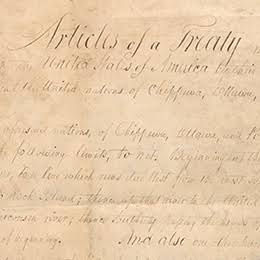
By June 18, 1832, Boone returned to the Mississippi River, completing his survey of the territory that the 1830 treaty had designated. The Neutral Ground's purpose shifted dramatically after Boone's survey. Starting in 1840, the U.S. government removed the Ho-Chunk (Winnebago) from Wisconsin and forced them into this neutral zone as a temporary home. Conflicts erupted between the Ho-Chunk and the Dakota, Sauk, and Meskwaki, leading to the construction of Fort Atkinson in 1840 to monitor the tribes. By 1848, the Ho-Chunk were pushed out again to Minnesota, then South Dakota, and finally to a reservation in northeast Nebraska. Boone's survey left a lasting name on Iowa maps: the city of Boone, Boone County, and the Boone River all commemorate his legacy. #Iowa #OTD #History #Survey #Borderlands


Comments